


Technical and Investment Guide to ZLD and Water Recycling: Stone Processing Wastewater
Introduction
Stone processing—including cutting, polishing, and gravel production—generates significant volumes of wastewater containing high suspended solids. Traditional settlement ponds are land-intensive, inefficient, and often fail to meet environmental Discharge Standards. This article presents a proven Zero Liquid Discharge (ZLD) solution that enables stone processors to reuse treated water directly in production while minimizing waste disposal costs.
Process Overview
1. Solids Separation in a Lamella Clarifier
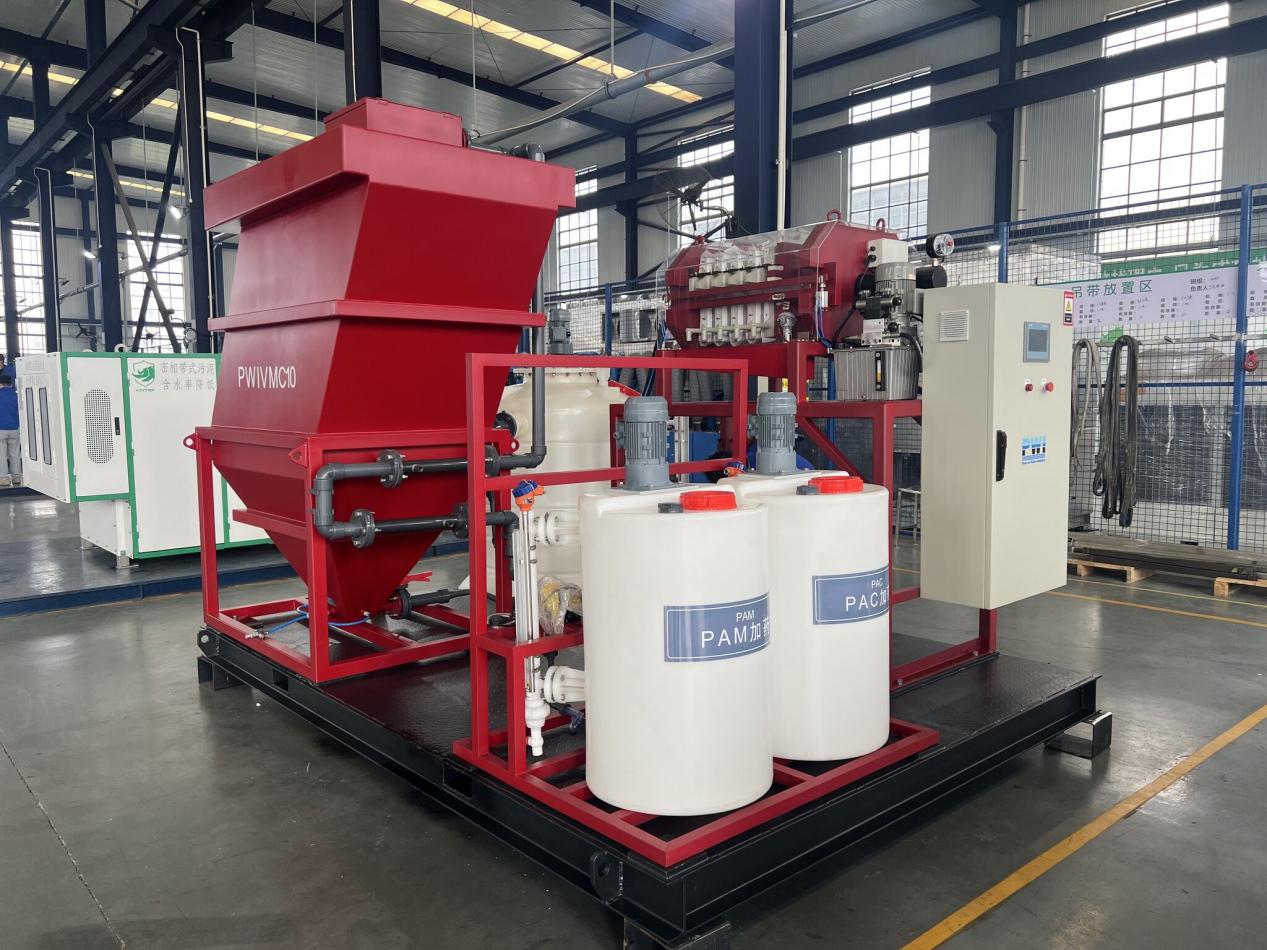
Wastewater is pumped from an equalization tank into a Lamella clarifier. Inside the clarifier, specially coated honeycomb tubes accelerate solids settling. Clear water overflows to a reuse tank and is pumped back to production lines. Concentrated sludge accumulates at the bottom of the clarifier.
2. Sludge Dewatering with a Filter Press
The thickened sludge is fed by a pneumatic diaphragm pump into a filter press. The hydraulic system provides a closing pressure of up to 250 bar. Special filter plates and high-performance filter cloths ensure a tight seal during the pressing cycle. Press filtrate is returned to the wastewater tank. A flow sensor monitors the dryness of the filter cake, and the press opens automatically when the preset dryness is reached. An air-assisted vibratory system helps discharge the dry sludge cake.
- Fully Automated PLC Control
The entire process is managed by a PLC controller. The system can run 24 hours a day unattended, and all operating parameters can be adjusted as needed.
Key Technical Features
| Feature | Performance |
|---|---|
| Treatment capacity | 15–75 m³/h (standard models), custom sizes available |
| Filtration cycle time | As low as 15 minutes per cycle |
| Chemical addition | None required (purely physical process) |
| Treated water quality | Solids < 100 mg/L – suitable for direct reuse |
| Footprint | No large multi-stage sedimentation ponds needed |
| Filter cloth life | >3,000 hours even with abrasive particles |
| Final sludge moisture content | Approx. 40% |
Equipment Configurations & Investment Reference
Three typical installations demonstrate the scalability of the solution.
Configuration A - 50 m³/h, solids < 0.2%
Equipment: Lamella clarifier + filter press + PLC touch control
Total power: 4.4 kW
Dimensions (clarifier + press): 4,630×2,510×2,910 mm / 2,260×1,000×4,120 mm
Investment: < €55,000
Configuration B - 5 m³/h (stone cutting wastewater)
Equipment: Compact filter unit + bag filtration system
Dimensions: 1,600×820×2,010 mm
Investment: ~ €6,500
Configuration C - 200 m³/h, solids < 0.1%
Equipment: Two parallel clarifiers + filter press + PLC control
Total power: 6.6 kW
Dimensions (clarifiers): 2×6,520×2,550×4,120 mm
Investment: ~ €100,000
Maintenance Costs (Typical Consumables)
| Component | Service life | Cost range (per unit) |
|---|---|---|
| Filter cloths | 3,000–4,000 hours | €15–45 (imported quality, size-dependent) |
| Diaphragm pump membranes | As needed | €15–40 |
| Diaphragm pump balls | As needed | €5–25 |
| Ball seats (304 stainless) | As needed | €9–32 |
| O-rings (PTFE) | As needed | €2–4 |
Case Studies
Case 1 - Gravel Processing
Location: Belgium
Industry: Gravel production
System: 2 x clarifier VMS500
In operation since: 2009
Long-term reliability demonstrated in abrasive gravel wastewater.
Case 2 - Granite Processing
Location: Germany
Industry: Granite industry
Systems: clarifier VMS200 + filter press KEP630/15 (2013) and clarifier VMS150 + filter press KRP630/12 (2017)
Multiple installations showing consistent performance over years.
Case 3 - Natural Stone & Composites
Location: Germany
Industry: Natural stone and composite materials
System: clarifier VMS250 + filter press KRP630/8
In operation since: 2015
Efficient solids removal without chemical addition.
Conclusion
Zero Liquid Discharge for stone processing wastewater is technically and economically feasible. The described system eliminates the need for large settlement ponds, reduces fresh water consumption, cuts sludge disposal costs, and meets strict environmental requirements—all with fully automated, unattended operation.